
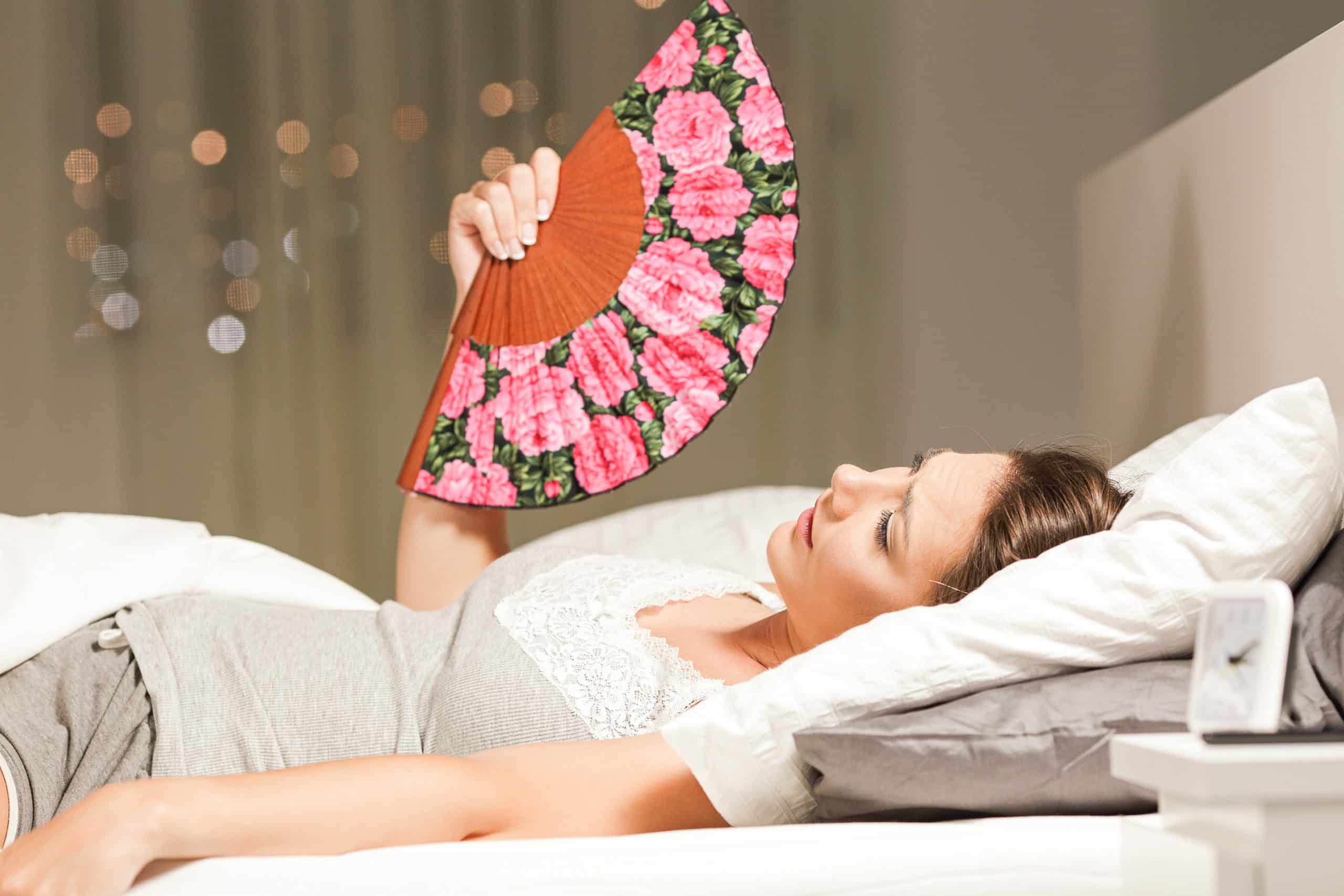

Nobody said postpartum was glamorous! There’s a whole list of “non-glamorous” things you’ll be dealing with after having a baby but today we’re talking about the dreaded Night Sweats (dun dun duuunnn).
You go to bed after a long day, feeling pretty good, only to wake to find you’re lying in a pool of your own sweat for no apparent reason. Don’t freak out, it’s completely normal. When pregnant, your body is doubling the amount of blood in your system and holding onto water. After giving birth, all that water has to go somewhere as your body returns to a pre-pregnancy state, and, unfortunately, it comes out in the form of sweat…lots and lots of sweat.
You may feel like you’re clammy all day long, and may notice an odor coming from you even though you just showered that morning. Totally normal…unfortunately.
When do postpartum night sweats start?
Pretty much right away. As soon as you deliver, your estrogen and progesterone levels drop fast, and your body responds by shedding the extra fluid it held onto during pregnancy, partly through sweat. Most parents start noticing the night sweats within the first day or two postpartum, sometimes during your hospital stay.
You’re not alone in this. Studies have documented postpartum night sweats and hot flashes in roughly a third of new parents, even though we mostly associate those vasomotor symptoms with menopause. Your body has a lot of fluid to clear in the first week, and the night shift is when most of that work happens.
How long do postpartum night sweats last?
For most parents, the heaviest sweats happen during the first one to two weeks postpartum — that’s when the bulk of pregnancy fluid clears out. After that, things calm down considerably.
If you’re breastfeeding, you might notice the sweats stick around longer, sometimes lingering throughout your nursing journey. Postpartum diaphoresis can continue throughout lactation because your hormones are still doing breastfeeding-related work. It’s usually milder by that point (more “warm flash” than “swimming pool”), but real.
One thing to watch: if the sweating is paired with a fever over 100.4°F, body aches, or feeling genuinely unwell, call your provider. That’s an infection signal and needs attention, not normal postpartum sweat.
Are night sweats different after a C-section?
Often, yes. The reason is mostly about IV fluids. C-section births typically involve significantly more IV fluid administration than vaginal births, both during the procedure and during your hospital recovery. That extra fluid has to go somewhere. Postpartum care research notes that IV fluid retention can take more than a week to fully resolve, which means more sweating to clear it.
You might also notice the sweats hit harder once you’re home and moving around more. Don’t be surprised if your first few nights back in your own bed are extra-wet. Stay hydrated (yes, drink water even when you’re soaking it out, the math works), keep the bedroom cool, and remember this phase passes.
Here’s some ways you can battle those pesky Night Sweats (or All Day Sweats):
Ways to Deal with Postpartum Night Sweats
- Wear Lightweight, Breathable Clothing: Think cotton and natural-fibered clothing that’s loose-fitting and airy. Steer clear of synthetic fabrics and anything super tight or bulky. But the best option is to, well, just sleep naked!
- Lay Down a Towel: Put a towel on your bed where you lay and get another to go over your pillow. This will save you from having to change or wash your bedding every day. You can even purchase a waterproof mattress cover to put under your sheets to protect your mattress from any moisture.
- **Turn on the A/C or Open a Window:**If you’re feeling HOT and sweaty, cool down the room. Crank up the A/C, turn on a fan, open a window if it’s cool outside. Your partner can wear snow gear to bed if they want to complain about how cold it is. (just kidding……..kinda.)
- Powder Your Bum:…well, your whole body really. Get some talc-free powder and smooth that goodness all over to absorb any excess moisture and prevent a rash.
This Too Shall Pass
Remember, this is all temporary. The postpartum sweats will stop. Your body was only holding onto so much water and once it’s gone, the sweating will be done.
Keep up your fluids during this time though. I know it sounds counterintuitive to be putting MORE fluids in when you’re trying to STOP the sweating, but your body is releasing the tons of fluid during this time, and you’ll have to replenish those fluids by drinking plenty of water, ESPECIALLY if you’re breastfeeding. Chug a big glass of water if you wake up one morning in your own personal bed pool.
In conclusion, stay comfortable (even if it means your partner is not), stay dry (as much as postpartum-ly possible), and stay hydrated (really can’t stress this one enough). You’ll get through this phase, and you’ll no longer be the sweaty kid of the family soon. I promise.
IMPORTANT NOTE: If you suspect you have a fever, take your temperature. If it’s anything over 100.4°F, call your provider.
Tags
Denise Curtis
Denise is a Certified Labor & Postpartum Doula, Childbirth Educator, and Lactation Educator based in Los Angeles, CA. She has helped thousands of families prepare for pregnancy, birth, postpartum, baby feeding, and infant care.
You may also like
Must-Have Postpartum Recovery Products (Doula-Approved)
5 Best Baby Items You Didn't Know You Needed (Doula Picks)
10 Questions to Ask When Hiring a Doula in Los Angeles
Want in-home support after your baby arrives? Denise offers postpartum doula services across Los Angeles.
Learn about Postpartum Doula support →